What is the Difference Between PTSD and Complex PTSD (C-PTSD)?
Written By

Derek Wise
MA, LCPC, Certified EMDR Therapist
Share This
Free Self-Assessments
Concerned about ADHD, PTSD, or anxiety? Take a quick, confidential self-screening to check your symptoms.
View All Screenings⚡ Key Takeaways
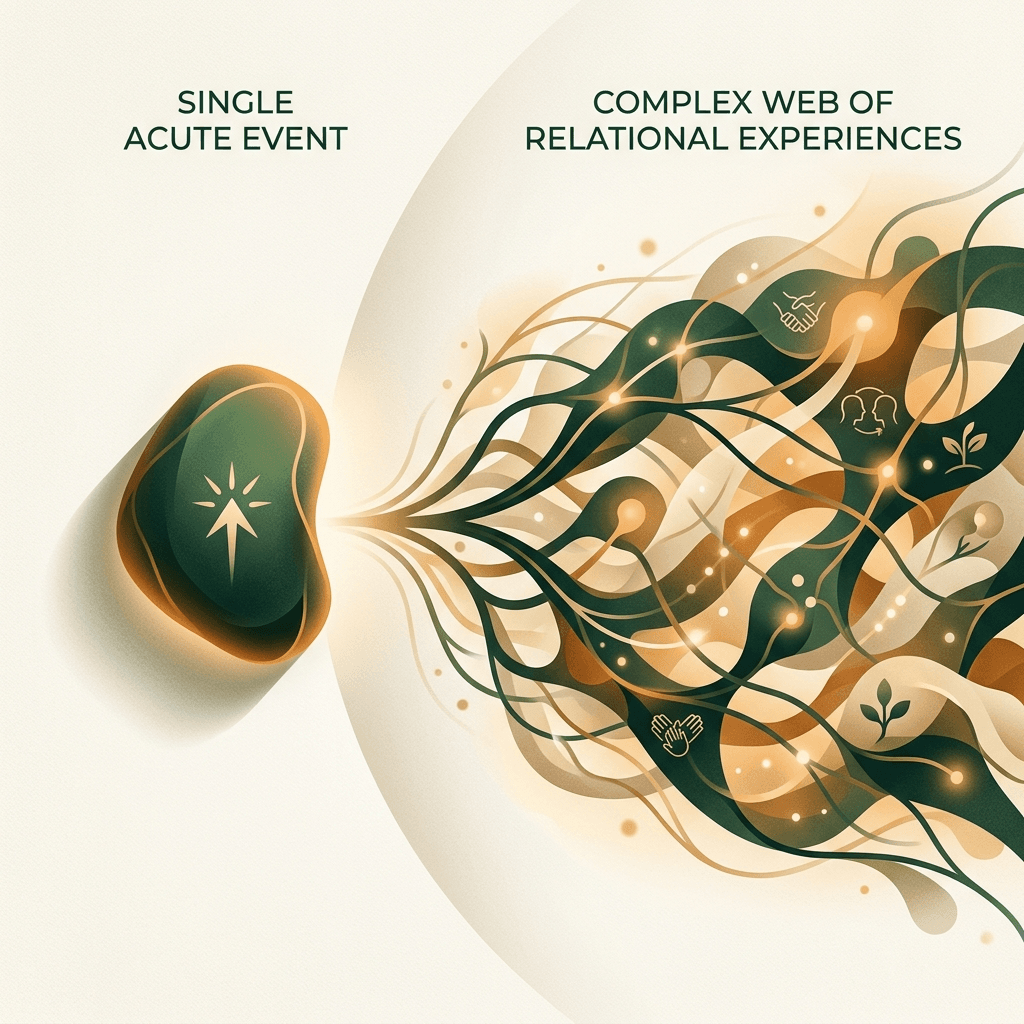
- •PTSD usually results from a single, acute threat (like a car crash) featuring a clear beginning and end.
- •Complex PTSD (C-PTSD) stems from prolonged, inescapable relational trauma, such as prolonged childhood abuse or domestic violence.
- •Both share symptoms of hyperarousal, avoidance, and flashbacks.
- •C-PTSD adds three unique symptoms: severe emotional dysregulation, a fractured sense of self-worth (deep shame), and extreme difficulty with interpersonal relationships.
- •C-PTSD requires an extended, highly careful 'stabilization phase' in therapy before trauma processing (like EMDR) can safely begin.
While PTSD is typically triggered by a single terrifying event, Complex PTSD stems from prolonged, inescapable trauma—often relational or childhood abuse. Understand the critical diagnostic differences and how specialized EMDR helps treat C-PTSD.
In the realm of trauma psychology, we are increasingly understanding that not all trauma leaves the same fingerprint on the brain. For years, the diagnosis of Post-Traumatic Stress Disorder (PTSD) was used as a catch-all for severe trauma responses. However, clinicians have long recognized that survivors of prolonged, repeated trauma require a distinct framework.
This led to the clinical recognition of Complex Post-Traumatic Stress Disorder (C-PTSD). While the two share the same core foundation of a hijacked nervous system, C-PTSD involves profound alterations in self-identity, emotional regulation, and interpersonal relationships.
The Core Event: Single vs. Prolonged Exposure
The primary difference between the two lies in the nature and duration of the traumatic event.
- 1. Standard PTSD is typically associated with a single, acute, highly terrifying event. This might be a severe car crash, a natural disaster, a single violent assault, or a specific combat engagement. The trauma has a clear beginning and a clear end.
- 2. Complex PTSD (C-PTSD) stems from chronic, ongoing, and repeated trauma from which the victim believed there was no escape. This almost always involves relational trauma where there is an extreme power imbalance. Examples include:
* Severe childhood emotional, physical, or sexual abuse
* Long-term domestic violence or coercive control
* Human trafficking or captivity
* Growing up with severely neglectful or narcissistic parents
What are the 3 Core Symptoms of Both (The Overlap)?
Anyone experiencing either PTSD or C-PTSD will likely deal with the three core pillars of trauma:
- 1. Re-experiencing: Flashbacks, intrusive thoughts, and night terrors about the trauma.
- 2. Avoidance: Going to extreme lengths to avoid places, people, or internal feelings that remind them of the event.
- 3. Hyperarousal: The nervous system is stuck "on," leading to exaggerated startle responses, insomnia, and being constantly on edge.
The 3 Additional Symptoms of C-PTSD
Where C-PTSD breaks away from standard PTSD is the addition of three specific symptom clusters that fundamentally alter how a person exists in the world.
1. Severe Emotional Dysregulation
While standard PTSD causes hyperarousal, C-PTSD deeply fractures a person's ability to soothe themselves. Survivors may experience explosive anger, profound depressive crashes, or chronic dissociation (feeling entirely detached from their own body or the world around them). The emotional “window of tolerance” is incredibly narrow.
2. Deeply Altered Self-Perception
A defining feature of C-PTSD is a pervasive, crushing sense of shame and worthlessness. If you grow up in an abusive environment, the developing brain rationalizes the abuse by concluding, *"I must be inherently bad to be treated this way."* Survivors often feel permanently damaged, unlovable, or fundamentally different from other humans.
"This article may bring up difficult feelings. Meridian offers trauma-focused therapy for adults who are working through experiences like these."
3. Interpersonal and Relational Difficulties
Because C-PTSD is almost always born from relational trauma, trusting other humans becomes nearly impossible. Survivors may swing between extreme isolation (avoiding connection entirely to stay safe) and extreme attachment (fawning, people-pleasing, or tolerating further abuse to avoid abandonment).
Why Does the Distinction Matter for Treatment?
Treating C-PTSD requires a much more nuanced, paced approach than treating single-incident PTSD.
If a client comes in with PTSD from a recent car crash, a qualified EMDR therapist might be able to rapidly process the target memory in a matter of weeks. The client has a healthy baseline of self-esteem to return to.
However, if a client comes in with C-PTSD from a decade of childhood abuse, jumping straight into trauma processing will likely flood their nervous system and cause severe dissociation. At Meridian Behavioral Health, our treatment for C-PTSD involves:
- 1. Extended Stabilization: We may spend months in the preparation phase, teaching the client how to ground themselves, regulate their breathing, and build up their internal resources before we ever touch traumatic memories.
- 2. Rebuilding the Self: We must gently dismantle the deep core belief of "I am worthless" and help the client reconstruct a coherent sense of identity.
- 3. Relational Healing: The therapeutic relationship itself becomes the medicine. The client must learn, perhaps for the first time, what it feels like to trust an authority figure who remains safe, consistent, and boundaried.
Finding Hope
Complex PTSD is heavy, exhausting, and pervasive. But it is not a life sentence. The brain's neuroplasticity means that the neural pathways laid down by chronic abuse can be re-routed. With specialized modalities like EMDR run by highly trained clinicians, survivors can move from merely surviving to genuinely inhabiting a life of safety and connection.
About the Author
Derek Wise, MA, LCPC is a mental health clinician at Meridian Behavioral Health specializing in trauma-informed psychotherapy, PTSD treatment, and evidence-based trauma therapy. He is a Certified EMDR Therapist.
References & Clinical Sources
- American Psychological Association (APA)
- National Institute of Mental Health (NIMH)
- World Health Organization (WHO) ICD-11 Trauma Criteria
- EMDR International Association (EMDRIA)
Medical Disclaimer
The information provided in this article is for educational purposes only and does not constitute medical advice, diagnosis, or treatment. It is not a substitute for professional psychiatric or clinical care. If you are experiencing a mental health emergency, please call 911 or go to the nearest emergency room immediately.
Need support with this?
Our team is ready to help you navigate your journey.
Trusted Mental Health Resources
These nationally recognized organizations provide free education, research, and crisis support:
- National Institute of Mental Health (NIMH) — Federal research on mental health conditions and treatments
- American Psychological Association (APA) — Evidence-based clinical guidelines and patient resources
- National Alliance on Mental Illness (NAMI) — Support, education, and advocacy for individuals and families
Read Next

When Therapy Feels Stuck: EMDR & Psychiatry

Healing Trauma with EMDR Therapy: Comprehensive Guide to PTSD, Complex Trauma, and Recovery