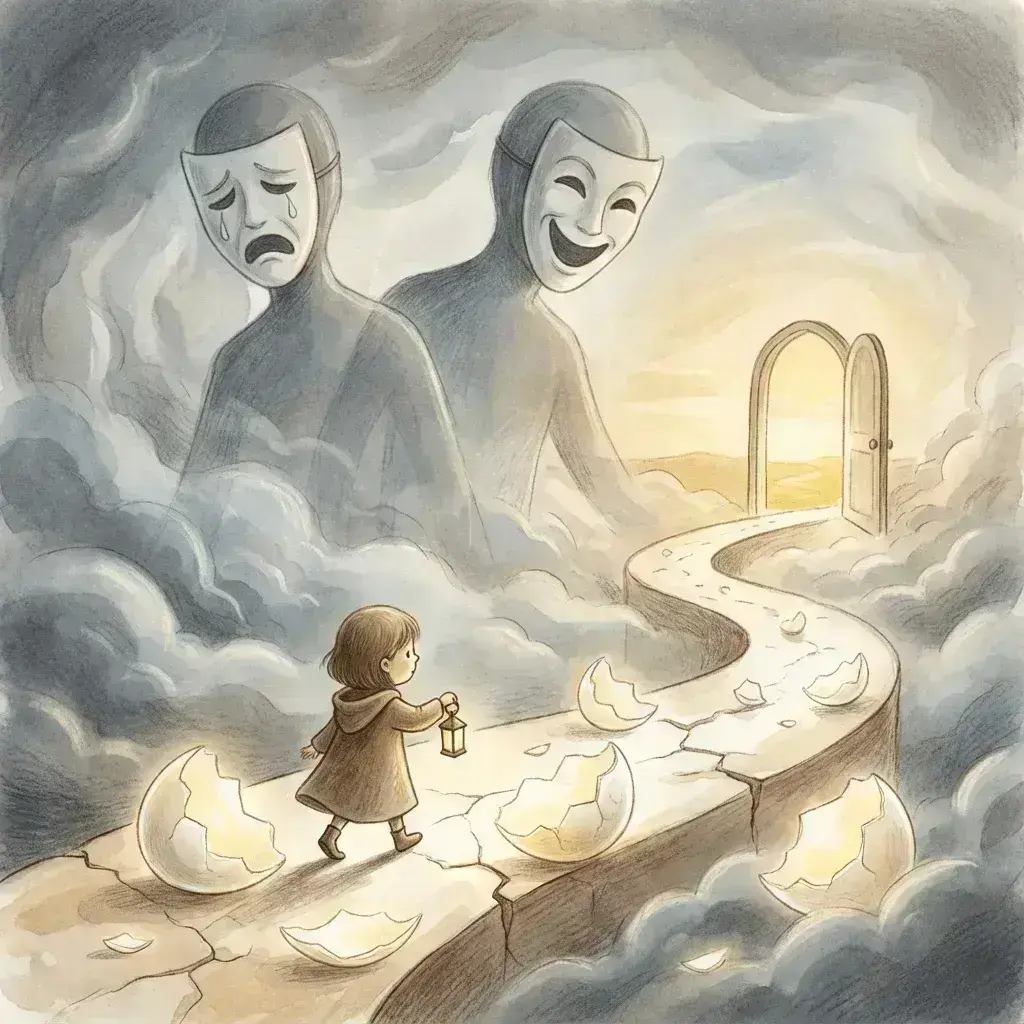
Walking on Eggshells: The Long-Term Impact of Borderline and Narcissistic Parenting
Written By

Derek Wise
MA, LCPC
Share This
Free Self-Assessments
Concerned about ADHD, PTSD, or anxiety? Take a quick, confidential self-screening to check your symptoms.
View All Screenings⚡ Key Takeaways
- •Borderline 'splitting' forces children into unstable 'All-Good' or 'All-Bad' roles that can switch overnight.
- •Narcissistic parents use children as 'mirrors' — the child exists only to reflect the parent's desired image.
- •Gaslighting by narcissistic parents destroys the child's trust in their own cognition and reality.
- •Four Borderline Mother archetypes (Waif, Hermit, Queen, Witch) each create distinct patterns of control and trauma.
- •Maladaptive schemas — self-sacrifice, shame, emotional inhibition, and perfectionism — develop as survival blueprints.
- •Growing up in BPD/NPD households is a significant ACE linked to depression, anxiety, PTSD, and other comorbidities.
- •Evidence-based therapies including DBT, Schema Therapy, and boundary-setting offer pathways to healing and identity reclamation.
For children raised by a parent with Borderline Personality Disorder (BPD) or Narcissistic Personality Disorder (NPD), 'home' is rarely a sanctuary. As a mental health professional at Meridian Behavioral Health, Derek Wise explores how 'walking on eggshells' reshapes a child's brain development, self-identity, and interpersonal relationships — and the evidence-based pathways to healing.
For children raised by a parent with Borderline Personality Disorder (BPD) or Narcissistic Personality Disorder (NPD), "home" is rarely a sanctuary. Instead, it is a place of hyper-vigilance. When a caregiver's mood is the primary weather system of the household—unpredictable, intense, and often stormy—the children become expert meteorologists.
As a mental health professional at Meridian Behavioral Health, I often see how this "walking on eggshells" is not just a metaphor; it is a state of chronic stress that can reshape a child's brain development and their understanding of interpersonal relationships. Whether the parent struggles with the emotional volatility of BPD or the grandiose entitlement of NPD, the result for the child is often the same: a fragmented sense of self and a lifetime spent managing the emotions of others.
The Clinical Authority: Understanding the "Split" and the "Mirror"
To understand these dynamics, we must look at the American Psychiatric Association's criteria for Cluster B personality disorders. While BPD is characterized by emotional dysregulation and a frantic fear of abandonment, NPD is defined by a lack of empathy and a desperate need for admiration.
The Borderline "Split"
A cornerstone of BPD is a defense mechanism known as splitting. In the clinical world of the Diagnostic and Statistical Manual of Mental Disorders (DSM-5), this is a cognitive distortion where the parent is unable to integrate the positive and negative qualities of a person into a cohesive whole. To a parent who splits, people are either "saints" or "traitors." There is no middle ground, which leaves the child in a state of constant instability.
The Narcissistic "Mirror"
In contrast, the narcissistic parent views the child as a "narcissistic extension" or a mirror. The child does not exist as an independent identity; they exist only to reflect the parent's desired image back to the world. If the child fails to mirror the parent's "perfection" or dares to express a need that inconveniences the parent, they are met with social rejection, icy silence, or narcissistic rage.
Two Sides of the Same Coin: Family Roles
While the disorders differ, they often manifest similar roles in the family system, which I categorize as the "All-Good" vs. "All-Bad" dynamic.
The All-Good Child (The Golden Child)
In the BPD Home: This child is the "savior". They are praised and enmeshed, but they are not allowed a separate identity. Their role is to stabilize the parent's emotion.
In the NPD Home: This child is the "trophy." They carry the weight of the parent's unfulfilled dreams. Their success is the parent's success; their failure is a personal affront to the parent. They are loved for what they do, not who they are.
The All-Bad Child (The Scapegoat)
In the BPD Home: This child is the repository for the parent's shame, anger, and instability. They are blamed for the family's problems.
In the NPD Home: This child is the "truth-teller" or the "disappointment." Because they see through the parent's facade or refuse to play along with the delusion of perfection, they are targeted with constant criticism and social stigma.
Tragically, these roles can switch overnight based on the parent's mood.
The Four Archetypes of the Borderline Mother
In her seminal work, *Understanding the Borderline Mother*, Christine Ann Lawson identifies four distinct archetypes. Recognizing these patterns is a powerful step in validating your reality:
1. The Waif: Plays the victim. She is helpless, fragile, and uses guilt to control her children. The underlying message is: "I am too fragile to survive without you".
2. The Hermit: Driven by paranoia and anxiety, the Hermit sees the world as a dangerous place. She isolates her children to "protect" them, trapping them within her own fears.
3. The Queen: Demands total compliance and constant admiration. She is driven by a deep sense of emptiness and uses her children as an audience. Disobedience is met with icy rage.
4. The Witch: The most severe archetype. Driven by envy and sadism, she lashes out to destroy the spirit of the child who threatens her control.
The Tactics of Narcissistic Parenting: Gaslighting and Control
Narcissistic parents utilize a different, but equally damaging, set of archetypes and tactics to maintain dominance:
Narcissistic Gaslighting
"This article may bring up difficult feelings. Meridian offers trauma-focused therapy for adults who are working through experiences like these."
Gaslighting is a primary tool of the narcissistic parent. By denying the child's reality ("That never happened," or "You're too sensitive"), the parent destroys the child's trust in their own cognition. This leads to a lifetime of second-guessing and dissociation as the child learns to prioritize the parent's version of the truth over their own lived experience.
The Vulnerable/Covert Narcissist
This parent uses sadness, fear, and "poor me" narratives to control. They are the "perpetual victim," and their children are groomed to feel responsible for the parent's failures. They use passive-aggression as their primary weapon to manipulate the child's sense of duty and guilt.
Internalized Schemas: The Blueprints of Survival
In Schema Therapy, we look at the deeply ingrained patterns or "blueprints" formed in childhood. For those raised in these environments, several maladaptive schemas often develop:
Self-Sacrifice: The belief that you must meet others' needs at the expense of your own to avoid abandonment.
Defectiveness/Shame: A deep-seated feeling that you are fundamentally flawed or "All-Bad".
Emotional Inhabitation: Suppressing your anger or sadness because expressing them was once dangerous or met with the parent's emotional dysregulation.
Unrelenting Standards: Developing perfectionism as a way to stay "All-Good" and avoid the parent's criticism.
The Clinical Reality: ACEs and Comorbidity
Growing up in such an environment is a significant adverse childhood experience (ACE). Without a stable emotional foundation, adult children of BPD/NPD parents often face a high risk of comorbidity, including:
[Major Depressive Disorder](/resources/clinical-depression): Resulting from years of suppressed needs and constant shame.
Anxiety Disorders: A permanent "fight-or-flight" response to the parent's mood disorder.
[Post-Traumatic Stress (PTSD)](/resources/navigating-ptsd): Chronic exposure to anger and neglect leads to long-term dissociation and suicidal ideation.
Genetic Predisposition: While genetics play a role in mental disorders, the environmental psychosocial stressors of a BPD/NPD household can trigger underlying vulnerabilities.
Reclaiming Your Identity: The Path to Healing
Healing from a childhood of "walking on eggshells" requires moving from survival mode to self-discovery. In my practice at Meridian Behavioral Health, we utilize several evidence-based psychiatry and therapy models:
Dialectical Behavior Therapy (DBT): Teaches skills for managing emotional dysregulation and improving interpersonal relationships.
Schema Therapy: Identifies the "blueprints" formed in childhood and replaces them with healthier perspectives.
Establishing Boundaries: Healing begins with recognizing these patterns and establishing firm boundaries. Learning that "No" is a complete sentence is a revolutionary act.
Mindfulness and Meditation: These practices help ground the brain, reducing the physiological impact of long-term stress.
You Are Not the Chaos
The most important realization is this: The chaos of your childhood was not your fault. You were a child trying to survive in a reality that didn't make sense. By seeking support from a health professional, you can reclaim the identity that was stolen from you.
Are you ready to stop walking on eggshells? Our team at Meridian Behavioral Health specializes in helping adults heal from complex family trauma.
Need support with this?
Our team is ready to help you navigate your journey.
Trusted Mental Health Resources
These nationally recognized organizations provide free education, research, and crisis support:
- National Institute of Mental Health (NIMH) — Federal research on mental health conditions and treatments
- American Psychological Association (APA) — Evidence-based clinical guidelines and patient resources
- National Alliance on Mental Illness (NAMI) — Support, education, and advocacy for individuals and families
Read Next

When Therapy Feels Stuck: EMDR & Psychiatry

Healing Trauma with EMDR Therapy: Comprehensive Guide to PTSD, Complex Trauma, and Recovery