Written By

Amy Wise
APRN-CNP, PMHNP-BC
Share This
Free Self-Assessments
Concerned about ADHD, PTSD, or anxiety? Take a quick, confidential self-screening to check your symptoms.
View All Screenings⚡ Key Takeaways
- •ADHD and Trauma share massive symptom overlap, including chronic distraction, restlessness, and emotional volatility.
- •ADHD is neurodevelopmental (present since childhood), whereas trauma symptoms usually begin after a distressing event.
- •ADHD distraction is a search for dopamine; trauma distraction is often hypervigilance and scanning for danger.
- •You can absolutely have both; undiagnosed ADHD often directly leads to childhood trauma due to chronic criticism and rejection.
- •Accurate differential diagnosis is critical because treating trauma exclusively with ADHD stimulants can worsen panic and nervous system activation.
Brain fog, emotional outbursts, and chronic restlessness. Are these symptoms of ADHD, or are they the nervous system's response to unresolved trauma? Learn how clinicians differentiate and treat these overlapping conditions.
In modern psychiatric practice, one of the most complex clinical puzzles to solve is the overlap between Attention-Deficit/Hyperactivity Disorder (ADHD) and the effects of chronic trauma or Post-Traumatic Stress Disorder (PTSD).
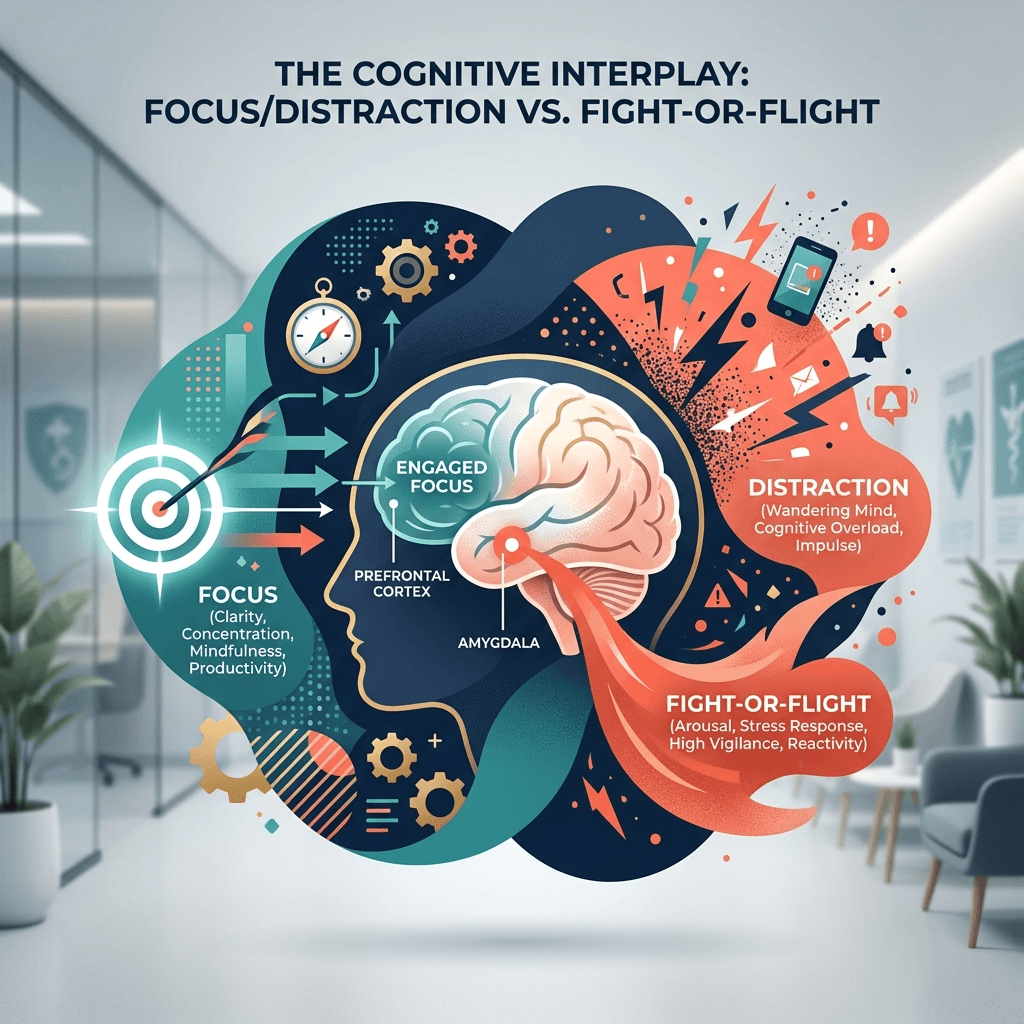
Both conditions profoundly affect the brain's executive functioning center (the prefrontal cortex) and the alarm system (the amygdala). Because the symptoms look remarkably similar from the outside, misdiagnosis is unfortunately common.
Are your focus issues a result of a neurodevelopmental dopamine deficiency (ADHD)? Or are you easily distracted because your nervous system is trapped in hypervigilance, constantly scanning the environment for danger (Trauma)? Here is how we tell the difference.
What are the Overlapping Symptoms?
If you look at the DSM-5 criteria for both conditions, you'll see a Venn diagram with a massive center. Common overlapping symptoms include:
1. Severe Inattention and "Brain Fog":
- ADHD: The brain lacks the neurochemical stimulation to sustain focus on non-preferred tasks.
- Trauma: The brain is exhausted from managing emotional pain and is dissociating or zoning out simply to survive.
2. Restlessness and Hyperactivity:
- ADHD: A physical and mental need for stimulation; a feeling of being "driven by a motor."
- Trauma: The "Flight" response. The nervous system is flooded with adrenaline, making it physically impossible to sit still or relax.
3. Emotional Dysregulation:
- ADHD: Difficulty pausing between feeling an emotion and acting on it (Rejection Sensitive Dysphoria is very common).
- Trauma: Getting easily triggered by specific environmental cues, leading to sudden anger or panic attacks.
How Do Clinicians Tell the Difference?
To accurately diagnose the root cause, a psychiatric professional must look beyond the *what* (the symptoms) and investigate the *when* and the *why*.
1. The Timeline of Symptoms
ADHD is a neurodevelopmental disorder. By definition, evidence of the traits must have been present before the age of 12. If you had a calm, highly focused, organized childhood and developed severe concentration and memory issues at age 25 after a car accident or a toxic relationship, that is a trauma response, not adult-onset ADHD.
2. The Nature of the Distraction
- In ADHD, distraction is scattered. Your mind jumps from doing laundry to answering an email to researching a random fact on Wikipedia. The distraction is a search for dopamine.
- In Trauma, the distraction is often highly specific. You are distracted by hypervigilance (monitoring the mood of the room, listening for footsteps, anticipating conflict) or intrusive memories.
3. Response to the Environment
"This article may bring up difficult feelings. Meridian offers trauma-focused therapy for adults who are working through experiences like these."
- ADHD symptoms are generally pervasive across all environments, though they may improve dramatically when a task is novel, highly interesting, or involves immense external pressure (hyperfocus).
- Trauma symptoms may fluctuate based on triggers. You might be perfectly focused in a safe, predictable environment, but totally lose your executive functioning when a person raises their voice or you feel trapped.
Can You Have Both ADHD and Trauma?
It is not an "either/or" situation. In fact, individuals with ADHD are significantly more likely to experience trauma. Growing up with undiagnosed ADHD often means enduring constant criticism ("Why can't you just try harder?"), social rejection, and chronic academic failure. This builds a foundation of "Little t" trauma.
Furthermore, the impulsivity and risk-taking behaviors associated with ADHD can mathematically increase the likelihood of experiencing "Big T" traumatic events, such as accidents.
Why is Getting the Diagnosis Right Critical?
Treating trauma with ADHD stimulants without addressing the nervous system can sometimes backfire. Stimulants increase heart rate and alertness, which can inadvertently throw a trauma-sensitized nervous system right back into a "fight or flight" panic attack.
Conversely, treating ADHD solely with trauma talk-therapy will be endlessly frustrating, because no amount of processing will fix a structural dopamine deficiency.
What is the Treatment Approach?
At Meridian Behavioral Health, our dual-track approach allows us to address both.
If both are present, we typically focus on stabilization first. We must ensure the nervous system is feeling safe using trauma-informed therapies like EMDR or CBT. Simultaneously, careful, conservative psychiatric medication management can provide the cognitive "scaffolding" needed to help the patient actually focus on and participate in their trauma therapy.
If you are struggling to make sense of your symptoms, a comprehensive psychiatric evaluation is the key to unlocking the right path forward.
About the Author
Amy Wise, APRN-CNP, PMHNP-BC, is a board-certified Psychiatric-Mental Health Nurse Practitioner. At Meridian Behavioral Health, she specializes in psychiatric evaluations and medication management for ADHD, depression, anxiety, and trauma recovery across Las Vegas.
References & Clinical Sources
- American Psychological Association (APA) - Addressing Intersecting Trauma and ADHD
- National Institute of Mental Health (NIMH) - Attention-Deficit/Hyperactivity Disorder
- CHADD - Children and Adults with Attention-Deficit/Hyperactivity Disorder
- Substance Abuse and Mental Health Services Administration (SAMHSA) - Trauma and Violence
Medical Disclaimer
The information provided in this article is for educational purposes only and does not constitute medical advice, diagnosis, or treatment. It is not a substitute for professional psychiatric or clinical care. If you are experiencing a mental health emergency, please call 911 or go to the nearest emergency room immediately.
Need support with this?
Our team is ready to help you navigate your journey.
Trusted Mental Health Resources
These nationally recognized organizations provide free education, research, and crisis support:
- National Institute of Mental Health (NIMH) — Federal research on mental health conditions and treatments
- American Psychological Association (APA) — Evidence-based clinical guidelines and patient resources
- National Alliance on Mental Illness (NAMI) — Support, education, and advocacy for individuals and families
Read Next

When Therapy Feels Stuck: EMDR & Psychiatry

Healing Trauma with EMDR Therapy: Comprehensive Guide to PTSD, Complex Trauma, and Recovery